Pool feeds: one production for many broadcasters (the Premis Perifèrics case)
What a pool feed is, why it saves local TV stations money and what has to be agreed before going live. With the example of the Premis Perifèrics gala in Amposta.
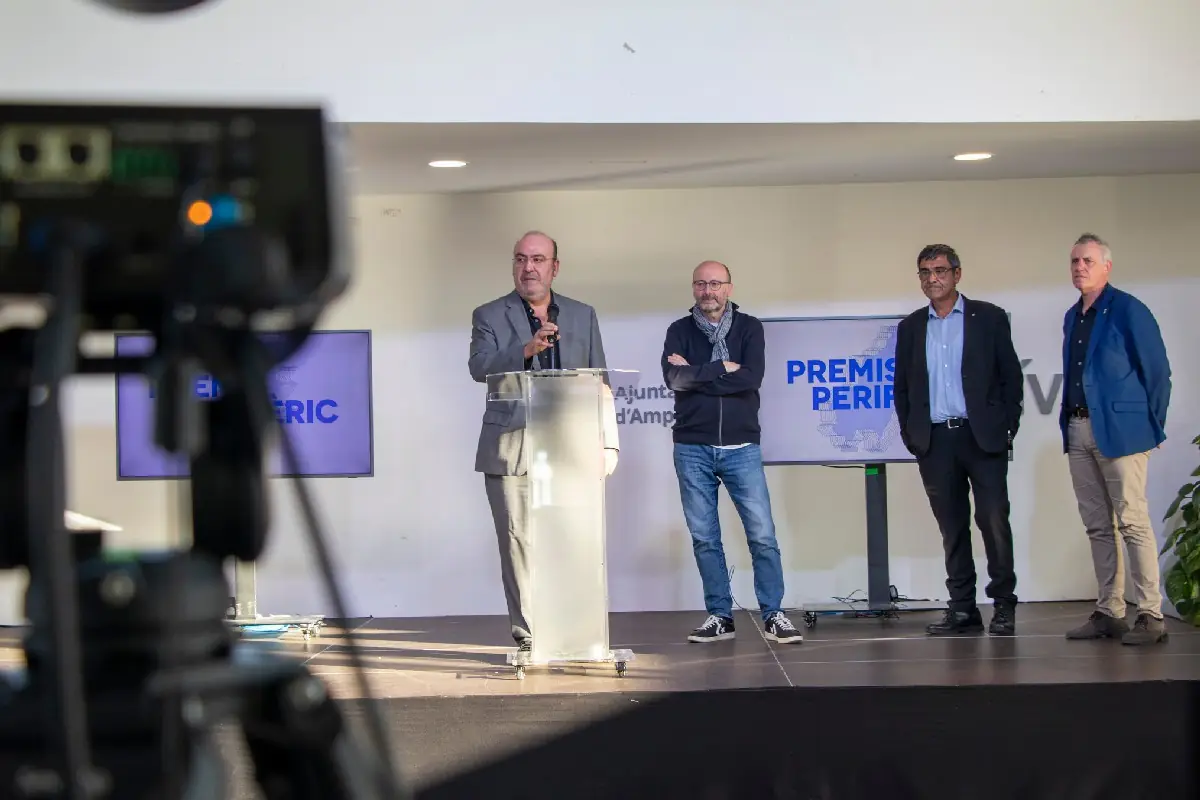
In April 2025 we directed the live production of the Premis Perifèrics gala in Amposta. It was not a job for a single channel: the feed leaving our OB unit was picked up at the same time by several local TV stations and platforms. In the trade this is called a pool feed.
What a pool feed is
One team produces a clean, multi-camera feed of an event and shares it with every outlet that wants to broadcast it. Each station receives it and adds its own logo, graphics and, if it wants, its own commentary. Viewers watch the gala on their usual channel, and no station has had to rig six cameras on its own.
It is standard at big events, but it makes most sense in local television. Local stations share territory, audiences and often tight budgets. Teaming up for an event is how they deliver coverage none of them could afford alone.
Why it pays off
- The cost is shared: OB unit, cameras and technical crew.
- Quality is the same for everyone: same direction, same sound, same shots.
- Each outlet keeps its identity, because it receives the feed without graphics and adds its own.
- The organiser gains reach: the event reaches several audiences with a single setup.
What to agree before going live
A pool works when everyone knows what they will receive. Before the day we put in writing:
- Video format: resolution and frame rate (for example 1080i50), so nobody has to convert at the last minute.
- Which feeds are delivered: usually a clean one without graphics, plus a programme feed with graphics for anyone who cannot add their own.
- Audio on separate tracks: ambience and stage on one side, presenters on the other, so each station can lay its own voice on top.
- How the signal travels: a dedicated cable link, satellite or the internet using video-oriented protocols such as SRT. The link has to be tested with every receiver before the event.
- Timings: when the test signal opens, when the live show starts and how much margin there is at the end.
- Rights: who can broadcast live, who can publish afterwards and for how long.
What we learned in Amposta
An awards gala has a fairly predictable running order, which helps. What you cannot predict are the speeches: some last thirty seconds, others five minutes. With several stations hooked to the same feed, the stage sets the pace, not one channel's rundown. So each outlet should have a filler or an opt-out ready in case the gala overruns.
Another lesson: keep one camera on a wide shot of the stage at all times. If a station joins late or misses a moment, it always has a safe shot to cut back to.
Who it makes sense for
- Galas, awards and institutional events that matter to a whole region.
- Festivals and traditions that several local stations want to broadcast.
- Meetings and events of provincial or inter-municipal bodies that affect many towns.
- Regional-level sports events.
If you run a local TV station, organise an event or work for a public body and want a shared live broadcast, let's talk. And if you want to see how we approach other live shows, here is what we check before switching on a camera.