How to direct a band concert live (what we learned at the Palau de la Música)
Score, cameras, sound and breaks: how we prepare the live production of a band contest, based on the 48th Provincial Band Contest and the 138th València International Band Contest.
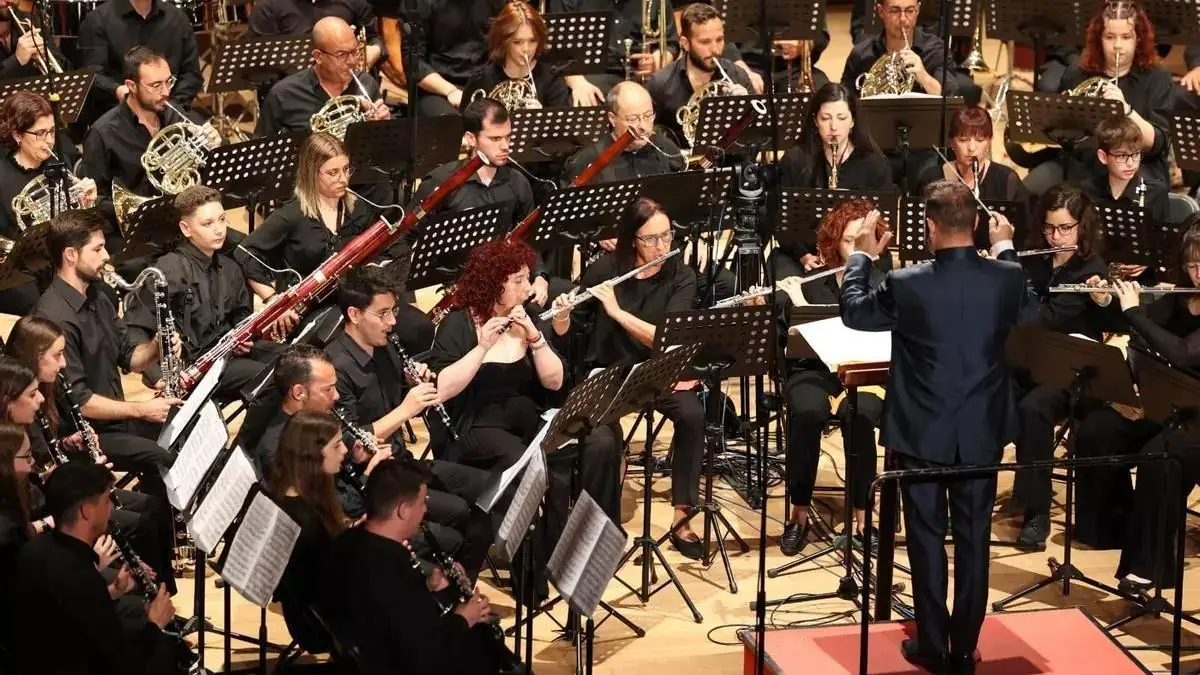
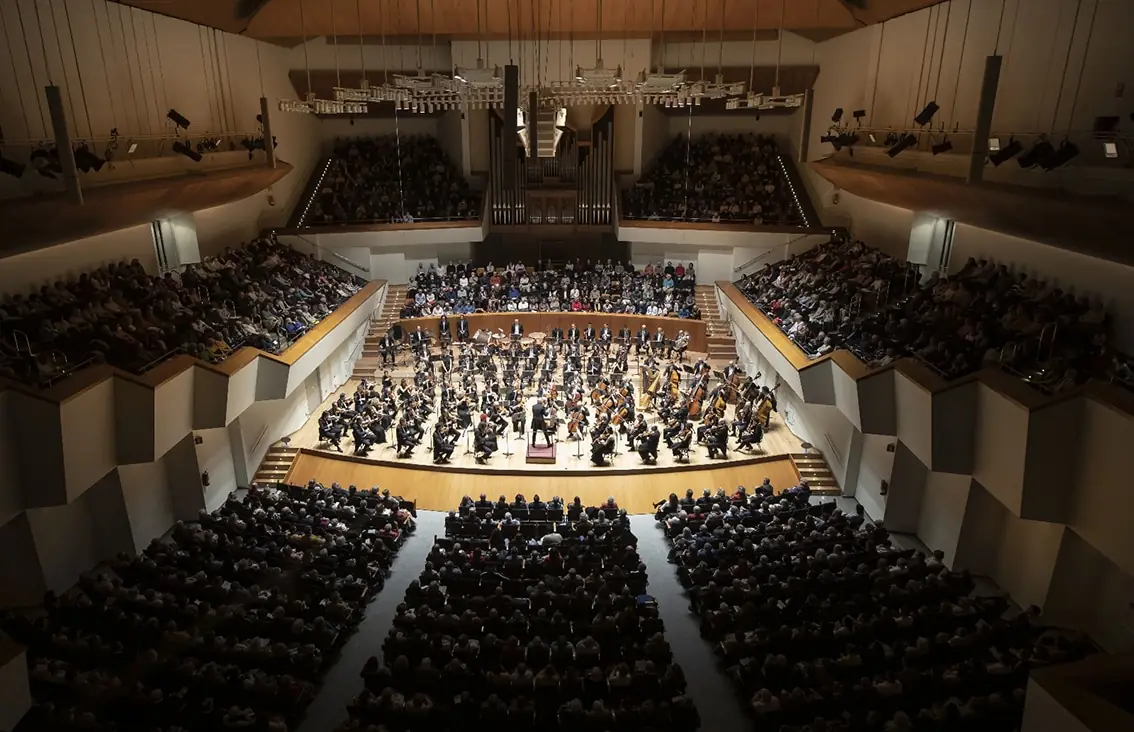
In March 2025 we directed the live production of the 48th Provincial Band Contest of the Valencia Provincial Council at the Palau de la Música. This July we were back in the same hall for the 138th Ciutat de València International Band Contest: four days, 44 bands and more than a thousand musicians, with ensembles from Lithuania, Italy, Portugal and the Netherlands.
From the outside it looks easy. The band is seated, nobody moves much, the stage never changes. In fact it is one of the live jobs that takes us the most preparation. Here is why, and how we do it.
A band is not a council meeting with trumpets
At a council meeting you know who will speak because there is an agenda. At a concert, the score is in charge. If the trumpet solo starts in bar 112 and the shot arrives in bar 114, the viewer has missed it. And in a contest there is no second take: each band plays its piece once, in front of the jury.
So the work starts days before, with the music. A contest usually has a set piece for each section and a free-choice piece for each band. The set piece is played several times over the day, so you need to know it inside out. The free-choice pieces change with every band and have to be prepared one by one.
The script is written on the score
Whenever we can, we ask for the full scores (or at least recordings) and mark the key moments: section entries, solos, tempo changes, the final tutti. The result is a camera script by bars or by minutes.
During the broadcast, someone on the team follows the score and calls what is coming: "woodwinds in eight bars", "euphonium solo after the fermata". The director does not have to guess; they just have to be on time.
With no score, a recording of an earlier performance helps you find your way. And with no recording either, you listen to the rehearsal with a notebook in hand.
Where to put the cameras without getting in the way
A concert hall has three groups to respect: the audience, who paid for their seats; the jury, who must see and hear without interference; and the musicians, who do not want a tripod half a metre from their music stand. With that in mind, the usual layout is:
- A locked-off wide shot from the back of the hall. It is the safe shot: if anything goes wrong, you cut back to it.
- Side cameras with long lenses for sections and soloists, in aisles or boxes, out of the jury's line of sight.
- The conductor, from the front. They are the face of the concert and give every cue. Shot from behind the band, taking care not to end up in the audience's view.
- A robotic camera or two where an operator will not fit, such as on the stage itself.
The exact number depends on the hall and the budget. More cameras will not fix a bad script; a good script gets the most out of a few cameras.
Sound matters more than picture
At a concert people forgive a late shot, but not bad sound. A symphonic band has a huge dynamic range: from the pianissimo of a lone clarinet to the fortissimo of the whole percussion section. What sounds great in the hall does not always sound great on a phone.
We work with a main pair of microphones for the room sound plus spot mics on the sections, and we mix with the listener's device in mind. Before each session we recheck levels with the first band on stage, because a 90-piece band does not sound like a 40-piece one.
The breaks are television too
Between bands the stage is reset: chairs, stands, percussion. That can take ten minutes or more. In the hall nothing happens; on air, ten minutes of an empty stage feel endless.
For those gaps we prepare content: an introduction to the next band, a short interview, shots of the audience or the musicians walking in. The caption with the band's name, section, piece and conductor has to be ready and checked before the first note. A misspelt surname on a live broadcast lives forever in screenshots.
What stays off air
A contest is a competition with its own rules. Usually the jury stays off camera and the results are announced when and how the organisers decide. Before going live we agree everything with them: what is broadcast, what is not, and who clears the copyright for the pieces performed if the recording is published later.
Who this kind of broadcast is for
Band contests, Saint Cecilia concerts, band festivals, showcases for new players or the town's festival concert. In the Valencian Community almost every town has a band with centuries of history, and more and more music societies want relatives in other cities to be able to watch them live.
If you have a contest or a concert coming up, tell us about it. You can see the 48th Provincial Band Contest in our portfolio and, for the more technical side of connectivity and permissions, here is what we check before any live broadcast.